Even in the Lake Garda area, where a sub-Mediterranean climate has historically characterized grape growing, growing seasons have become less predictable, with sudden temperature swings, heavy rainfall, and phytosanitary pressure that can persist even beyond the veraison stage. In this scenario, the sustainability of wine production also requires a review of the agronomic and oenological criteria used to evaluate grape quality.
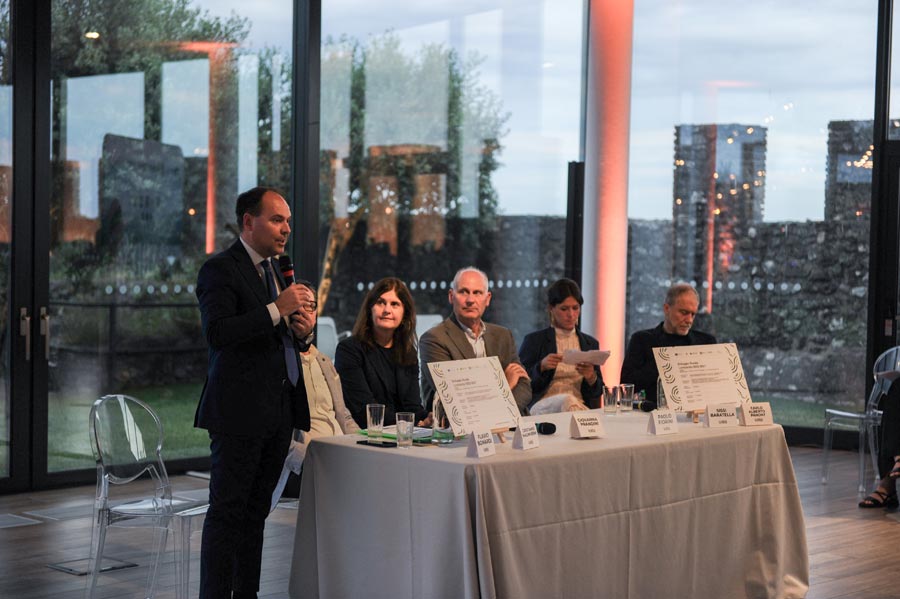
It is from this awareness that the Sustainable DOC Production Model takes shape, the focus of the public information meeting "LOW" DOC Garda – Information, sustainability and quality in the Garda DOC, promoted by the Garda DOC Consortium on June 4th. This was an opportunity to delve deeper into the experience developed in the Verona area throughout the denomination, particularly in the Mantua and Brescia areas, and to illustrate how the evolution of ripeness assessment practices can contribute to more sustainable production management.
The model stems from the need to move beyond a view of grape quality that focuses primarily on sugar content, also understood as a benchmark for commercial value, to adopt a more comprehensive analysis of the ripeness index. Alongside sugar accumulation, the balance between acidity and pH and the oenological health of the grapes, assessed in terms of their chemical, physical, and organoleptic characteristics in relation to the harvest calendar, become key factors. This approach allows for the identification of the most appropriate time for harvest, taking into account the actual conditions of the year and the characteristics of the raw material.
Garganega, like many other medium-late ripening vines of the Garda DOC, represents a particularly significant case for the Verona area.
The implementation of the DOC Sustainable Production Model has allowed, in particular, to diversify the winemaking destination of Garganega grapes, adding a new classification option for Garda DOC to the production of historic denominations and IGTs. This decision has generated greater added value along the entire supply chain, from vineyard to grape, from wine to certified bottle, enhancing the value of a raw material through more comprehensive management of its production potential.
To support this process, the Consortium conducted a technical and agronomic analysis of data collected between 2019 and 2024 in vineyards representing various areas of the denomination. The measurements examined the trends in the main ripening parameters—sugars, acidity, and pH—highlighting that, in the first ten days of September, the average sugar content was 14.15 degrees Babo, higher than the threshold of 13.65 degrees Babo identified for the proposed adjustment of the minimum natural alcoholic strength by volume of Garganega grapes destined for Garda DOC, from 9.5% to 8.5%.
The analysis therefore provided technical support for the proposed modification of the regulations, with a view to greater flexibility in production management and oenological diversification consistent with the characteristics of the grapes and current climate conditions. From an oenological perspective, too, the wine samples examined demonstrated positive effects of the lower alcohol content on aromatic perception, particularly on fruity and floral notes, which are important elements for the profile of ready-to-drink wines.
The DOC Sustainable Production Model thus represents an example of sustainability that extends beyond the environmental dimension, encompassing both production and economic aspects. The goal is to respond to changing climate conditions through more sophisticated assessment tools, safeguard grape quality, and offer winemakers further opportunities to enhance their work.
For the Garda DOC Consortium, informing and sharing experiences and technical data means guiding the production system on a journey of awareness, in which sustainability also becomes the ability to adapt, plan, and enhance the territory's resources.
Initiative funded by the European Agricultural Fund for Rural Development (EAFRD) through the Rural Development Complement of the Lombardy Region's 2023-2027 CAP Strategic Plan. Information and calls for proposals: https://psr.regione.lombardia.it

23/11/2026

16/11/2026
02/11/2026

29/10/2026