An investment may involve an already authorized source, an operational plant, a company with trademarks and consolidated distribution, or an industrial project yet to be developed.
For an entrepreneur, a beverage group, or a financial investor, the initial question should not be just how much it costs to purchase a source, but above all what industrial and commercial value it can generate over time.
1. The concession: the first element to verify
In Italy, the exploitation of natural mineral waters is subject to specific permits and authorizations, with regional jurisdictions and provisions applicable to each individual territory.
Before evaluating any acquisition it is necessary to verify:
A concession with a long residual term and defined conditions can offer greater predictability to the investment, while tight deadlines or significant constraints can significantly impact the valuation.
Furthermore, the exploitation concession must be distinguished from the authorizations required for the recognition and bottling of natural mineral water.
2. Water availability: the theoretical quantity is not the actual production
One of the most common mistakes is to consider the flow of the source as if it could automatically be transformed into saleable bottles.
A flow rate of 5 litres per second, for example, theoretically corresponds to:
Theoretical daily flow rate
432,000 L
Theoretical annual flow rate
157.7 million L
Mathematical calculation 24 hours a day, 365 days a year, without interruptions or losses. This does not represent the authorized, sustainable, or actual volume that can be bottled.
Actual production depends on numerous factors: hydrogeological sustainability, concession requirements, plant capacity, maintenance, process losses, and commercial demand.
It is therefore necessary to analyse the availability of the resource in different seasons and its compatibility with development programmes.
3. Water quality and ministerial recognition
Not all groundwater can be marketed as natural mineral water.
Recognition requires compliance with applicable regulations and specific checks on the characteristics of the resource.
The investor must carefully examine the chemical-physical composition, microbiological characteristics, long-term stability, water intake protection, and health documentation.
The mineral profile can also be of commercial relevance, provided that the characteristics communicated to the consumer and any indications on the label comply with current regulations.
The quality of the resource therefore constitutes an asset to be protected and enhanced.
4. Bottling plant: capacity, efficiency and investments
An already operational plant can offer a significant advantage over a project that needs to be fully implemented.
However, it is necessary to verify the status of the production lines, hourly capacities, manageable formats, level of automation, energy consumption, maintenance and the adequacy of the infrastructure.
Particular attention must be paid to the difference between nominal capacity and actual production.
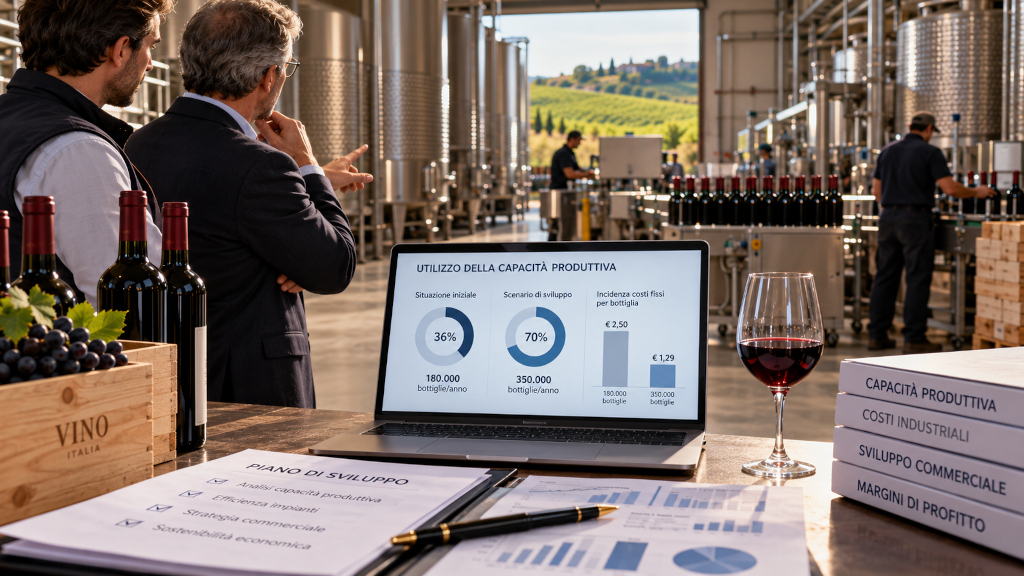
A plant designed for large volumes but only partially utilized could represent a development opportunity, provided that markets and distribution channels exist capable of absorbing the increased production.
5. Market and distribution: the real test
Having millions of liters of water does not necessarily mean you can sell them at a profit.
The mineral water market is characterized by a strong focus on pricing, distribution, logistics costs, and brand positioning.
An industrial project should therefore evaluate different business models.
|
Model |
Opportunity |
Critical issues |
|
Own brand |
Commercial valorization and recognition |
Investments in marketing and distribution |
|
Private label |
Volumes through structured clients |
Pressure on margins |
|
Ho.Re.Ca. |
Positioning and differentiation |
Sales network and commercial costs |
|
Third party account |
Utilization of production capacity |
Dependence on clients |
|
Export |
Diversification of markets |
Transport, competition and local requirements |
The choice must be consistent with the characteristics of the water, the location of the plant, industrial costs and the availability of capital.
6. How much capital is really needed?
The purchase price is only a part of the overall investment.
In addition to the acquisition of the company, concession, or assets, depending on the legal structure of the transaction, it is necessary to consider the investments required to achieve production and commercial objectives.
The main items include plant modernization, any interventions on water catchment, structural adaptations, warehouse, working capital, and distribution network development.
A seemingly convenient operation can become challenging if the financial needs after the purchase are not correctly estimated.
7. How to determine the value of a mineral water source
There is no standard value per liter per second that can determine, by itself, the price of a source.
A serious industrial evaluation must consider at least three dimensions:
Value of the resource and rights. Hydrogeological characteristics, duration and conditions of the concession, authorizations, and sustainability of exploitation.
Value of industrial assets. Land, buildings, plants, equipment, state of maintenance, and required investments.
Economic and commercial value. Revenue, margins, contracts, brands, customers, debt, and future cash flow generation.
These elements should not be added automatically: duplication between the value of assets and that of future income must be avoided.
For an operating company, the analysis may use cash flow-based methods and comparisons with comparable operations, appropriately adapted to the specifics of the company.
For a source yet to be developed, industrial scenarios, authorization times, investments and probability of implementation take on greater importance.
8. Buying a source or an already operating company?
The two opportunities present different risk profiles.
A source with a concession but without a factory can offer design freedom, but requires greater investment, construction times, and authorization checks.
An operational company, on the other hand, may have its own infrastructure, staff, customers, and revenue. In this case, economic-financial, technical, environmental, and commercial due diligence becomes crucial.
For some industrial groups, the acquisition can also have strategic value: integrating production capacity, expanding the brand portfolio, or strengthening geographical presence.
9. Risks that an investor should not underestimate
The most significant critical issues are not always visible during a first visit to the plant.
They may concern concessions approaching expiry, lower-than-expected water availability, technologically outdated systems, high energy costs, unprofitable commercial contracts, or the need for unexpected investments.
Particular attention must be paid to customer concentration and logistics costs, which can significantly impact profitability.
Due diligence must identify these risks before finalizing the price and contractual commitments.
10. The role of FORBUS: from analysis to industrial operation
FORBUS supports entrepreneurs, beverage groups, private investors, family offices, and industrial operators interested in the acquisition, development, and valorization of mineral water sources and bottling plants.
Our approach is not limited to finding an available property.
We analyze the industrial and commercial characteristics of the opportunity, identify critical issues, evaluate potential development scenarios, and coordinate, where necessary, the contributions of technical, legal, tax, and financial professionals.
The goal is to guide the investor through the entire process, from the preliminary assessment to the structuring and completion of the transaction.
Conclusion: Value is not just in the water
Investing in the mineral water sector means acquiring or developing a system comprising natural resources, exploitation rights, infrastructure, production organization, and markets.
A source may represent an important asset, but its economic value depends on the concrete possibility of transforming that resource into a sustainable and profitable activity.
For this reason, before purchasing a mineral water source it is necessary to evaluate not only what exists, but also what it can realistically become.
Are you considering investing in the mineral water sector?
FORBUS can assist you in researching and evaluating sources, bottling companies, and industrial projects in the beverage sector, with a confidential and execution-oriented approach.
Introduce your interest in beverages.
FORBUS – Strategic Business Advisory
An investment may involve an already authorized source, an operational plant, a company with trademarks and consolidated distribution, or an industrial project yet to be developed.
For an entrepreneur, a beverage group, or a financial investor, the initial question should not be just how much it costs to purchase a source, but above all what industrial and commercial value it can generate over time.
1. The concession: the first element to verify
In Italy, the exploitation of natural mineral waters is subject to specific permits and authorizations, with regional jurisdictions and provisions applicable to each individual territory.
Before evaluating any acquisition it is necessary to verify:
A concession with a long residual term and defined conditions can offer greater predictability to the investment, while tight deadlines or significant constraints can significantly impact the valuation.
Furthermore, the exploitation concession must be distinguished from the authorizations required for the recognition and bottling of natural mineral water.
2. Water availability: the theoretical quantity is not the actual production
One of the most common mistakes is to consider the flow of the source as if it could automatically be transformed into saleable bottles.
A flow rate of 5 litres per second, for example, theoretically corresponds to:
Theoretical daily flow rate
432,000 L
Theoretical annual flow rate
157.7 million L
Mathematical calculation 24 hours a day, 365 days a year, without interruptions or losses. This does not represent the authorized, sustainable, or actual volume that can be bottled.
Actual production depends on numerous factors: hydrogeological sustainability, concession requirements, plant capacity, maintenance, process losses, and commercial demand.
It is therefore necessary to analyse the availability of the resource in different seasons and its compatibility with development programmes.
3. Water quality and ministerial recognition
Not all groundwater can be marketed as natural mineral water.
Recognition requires compliance with applicable regulations and specific checks on the characteristics of the resource.
The investor must carefully examine the chemical-physical composition, microbiological characteristics, long-term stability, water intake protection, and health documentation.
The mineral profile can also be of commercial relevance, provided that the characteristics communicated to the consumer and any indications on the label comply with current regulations.
The quality of the resource therefore constitutes an asset to be protected and enhanced.
4. Bottling plant: capacity, efficiency and investments
An already operational plant can offer a significant advantage over a project that needs to be fully implemented.
However, it is necessary to verify the status of the production lines, hourly capacities, manageable formats, level of automation, energy consumption, maintenance and the adequacy of the infrastructure.
Particular attention must be paid to the difference between nominal capacity and actual production.
A plant designed for large volumes but only partially utilized could represent a development opportunity, provided that markets and distribution channels exist capable of absorbing the increased production.
5. Market and distribution: the real test
Having millions of liters of water does not necessarily mean you can sell them at a profit.
The mineral water market is characterized by a strong focus on pricing, distribution, logistics costs, and brand positioning.
An industrial project should therefore evaluate different business models.
|
Model |
Opportunity |
Critical issues |
|
Own brand |
Commercial valorization and recognition |
Investments in marketing and distribution |
|
Private label |
Volumes through structured clients |
Pressure on margins |
|
Ho.Re.Ca. |
Positioning and differentiation |
Sales network and commercial costs |
|
Third party account |
Utilization of production capacity |
Dependence on clients |
|
Export |
Diversification of markets |
Transport, competition and local requirements |
The choice must be consistent with the characteristics of the water, the location of the plant, industrial costs and the availability of capital.
6. How much capital is really needed?
The purchase price is only a part of the overall investment.
In addition to the acquisition of the company, concession, or assets, depending on the legal structure of the transaction, it is necessary to consider the investments required to achieve production and commercial objectives.
The main items include plant modernization, any interventions on water catchment, structural adaptations, warehouse, working capital, and distribution network development.
A seemingly convenient operation can become challenging if the financial needs after the purchase are not correctly estimated.
7. How to determine the value of a mineral water source
There is no standard value per liter per second that can determine, by itself, the price of a source.
A serious industrial evaluation must consider at least three dimensions:
Value of the resource and rights. Hydrogeological characteristics, duration and conditions of the concession, authorizations, and sustainability of exploitation.
Value of industrial assets. Land, buildings, plants, equipment, state of maintenance, and required investments.
Economic and commercial value. Revenue, margins, contracts, brands, customers, debt, and future cash flow generation.
These elements should not be added automatically: duplication between the value of assets and that of future income must be avoided.
For an operating company, the analysis may use cash flow-based methods and comparisons with comparable operations, appropriately adapted to the specifics of the company.
For a source yet to be developed, industrial scenarios, authorization times, investments and probability of implementation take on greater importance.
8. Buying a source or an already operating company?
The two opportunities present different risk profiles.
A source with a concession but without a factory can offer design freedom, but requires greater investment, construction times, and authorization checks.
An operational company, on the other hand, may have its own infrastructure, staff, customers, and revenue. In this case, economic-financial, technical, environmental, and commercial due diligence becomes crucial.
For some industrial groups, the acquisition can also have strategic value: integrating production capacity, expanding the brand portfolio, or strengthening geographical presence.
9. Risks that an investor should not underestimate
The most significant critical issues are not always visible during a first visit to the plant.
They may concern concessions approaching expiry, lower-than-expected water availability, technologically outdated systems, high energy costs, unprofitable commercial contracts, or the need for unexpected investments.
Particular attention must be paid to customer concentration and logistics costs, which can significantly impact profitability.
Due diligence must identify these risks before finalizing the price and contractual commitments.
10. The role of FORBUS: from analysis to industrial operation
FORBUS supports entrepreneurs, beverage groups, private investors, family offices, and industrial operators interested in the acquisition, development, and valorization of mineral water sources and bottling plants.
Our approach is not limited to finding an available property.
We analyze the industrial and commercial characteristics of the opportunity, identify critical issues, evaluate potential development scenarios, and coordinate, where necessary, the contributions of technical, legal, tax, and financial professionals.
The goal is to guide the investor through the entire process, from the preliminary assessment to the structuring and completion of the transaction.
Conclusion: Value is not just in the water
Investing in the mineral water sector means acquiring or developing a system comprising natural resources, exploitation rights, infrastructure, production organization, and markets.
A source may represent an important asset, but its economic value depends on the concrete possibility of transforming that resource into a sustainable and profitable activity.
For this reason, before purchasing a mineral water source it is necessary to evaluate not only what exists, but also what it can realistically become.
Are you considering investing in the mineral water sector?
FORBUS can assist you in researching and evaluating sources, bottling companies, and industrial projects in the beverage sector, with a confidential and execution-oriented approach.
Introduce your interest in beverages.
FORBUS – Strategic Business Advisory www.forbus.it
27/10/2026

26/10/2026

25/10/2026

24/10/2026