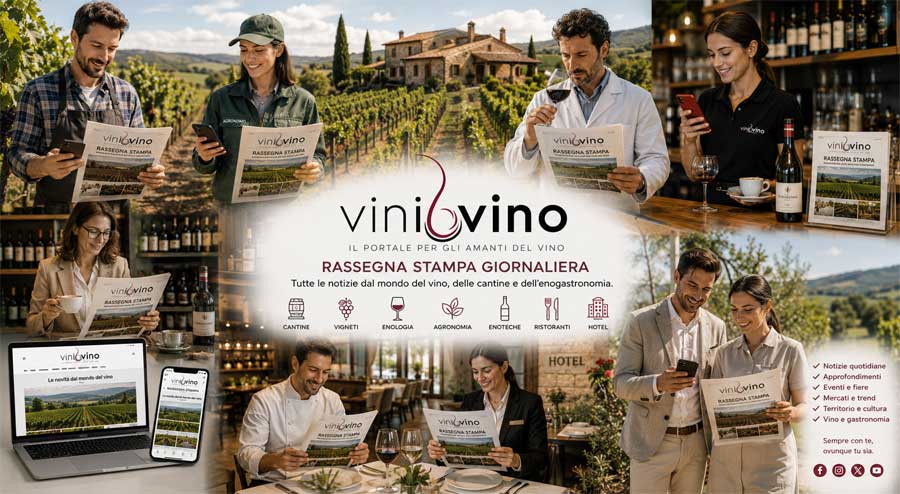
Today's review showcases a winemaking sector undergoing transformation: the 2026 harvest is impacted by climate change, wineries are investing in quality and sustainability, while international awards confirm the prestige of Italian wine. There's also growing attention to digital technologies, biodiversity, and new consumption habits.
1. Italian wineries: companies, investments, and territories
Gorgo Winery: 50 years of organic viticulture in Custoza. The Bricolo family winery, led by Roberta Bricolo, celebrates half a century of activity with 53 hectares of organic vineyards, combining tradition, contemporary architecture, and hospitality.
Arnaldo Caprai: the innovation that elevated Sagrantino. Marco Caprai recounts the entrepreneurial journey that helped transform Sagrantino di Montefalco into an internationally recognized wine.
Moser Winery: DOME inaugurated in Trentino. The new underground facility at Maso Warth is dedicated to the storage and aging of Trentodoc, with temperature and humidity control systems.
Oniwines: ERT1050 is born on Monte Baldo. The Veronesi family's winemaking group presents a Trentodoc project focused on mountain viticulture, with vineyards reaching 1,050 meters above sea level.
La-Vis and Cembra: the strength of cooperation. This historic Trentino cooperative now comprises approximately 400 members and 400 hectares of vineyards, leveraging the diverse soils and microclimates of the Avisio Hills.
Bolgheri: the Di Vaira family focuses on artisanal quality. Ten hectares of vineyards and approximately 50,000 bottles characterize the company led by Dario Di Vaira, with production that pays attention to the identity of each individual vineyard.
Orsolani Winery: Over 130 Years of Erbaluce. In San Giorgio Canavese, four generations of the Orsolani family have contributed to the development of Erbaluce di Caluso, including its sparkling version.
Elisabetta Foradori is reviving ancient vineyards on Monte Baldo. The Tutti i Frutti project stems from the restoration of ancient local varieties and historic terraces, enhancing viticultural biodiversity.
Brave Wine: three wineries united by their commitment to local areas. Diesel Farm in Veneto, Josetta Saffirio in Piedmont, and Benanti in Sicily share a project promoted by Renzo Rosso, each maintaining their own unique production identity.
Masot celebrates ten years of business. The Da Ros family winery, located in Sarmede, near Treviso, is celebrating its dedication to Prosecco and the rediscovery of local varieties like Boschera.
Cesarini Sforza: forty years of Aquila Reale. The historic Trentodoc label celebrates the anniversary with a special magnum of the 2001 vintage, produced in 500 numbered bottles.
2. Italian wine and oenology: harvest, quality and consumption
2026 harvest: Italy is Europe's leading producer, but volumes are declining. According to Copa-Cogeca estimates, Italian production will reach 41.1 million hectoliters, almost 8% less than in 2025. Drought and high temperatures have particularly affected some southern regions. The data is still provisional.
Friuli Venezia Giulia: early harvest and healthy grapes. From Collio to Carso, heat and drought brought the harvest forward. Initial assessments indicate healthy grapes, despite a challenging climatic year.
Alto Adige: 2026 wines are rich yet balanced. Producers attending the Merano WineFestival described an early harvest, with positive quality prospects for both whites and reds.
Primitivo di Manduria: quality and affordability. A selection of seven wines under €20 confirms the growing interest in Puglia's Primitivo and its value for money.
Malvasia di Candia: rediscovered in the Piacenza Hills. The grape variety, linked to ancient Mediterranean trade, is making a comeback with still wines and interpretations capable of evolving over time.
Barolo and Brunello: a comparison of two great Italian reds. Barolo DOCG is made from Piedmontese Nebbiolo, while Brunello di Montalcino DOCG is made from Tuscan Sangiovese. Both are distinguished by their structure, complexity, and aging potential.
Paolo Conte and the memory of lower-alcohol wines. The Piedmontese singer-songwriter expresses his preference for the wines of the past, recalling Grignolino, young Barbera, and Pelaverga di Verduno. A reflection that draws attention to alcohol content, balance, and drinkability.
Non-alcoholic cocktails: new opportunities for beverages. Mixology offers alcohol-free versions of Negronis, Bellinis, and Old Fashioneds, focusing on aromatic complexity and capturing new consumer behaviors.
The home cellar: ten wines for every occasion. An editorial selection suggests building a small reserve, balanced between sparkling, white, rosé, and red wines, favoring versatility and drinking occasions.
3. International markets, rankings and sustainability
Wine Spectator 2026: 22 Italian wines in the Top 100. The 2021 Barbaresco Rabajà Riserva from Produttori del Barbaresco takes second place, while Caparzo's 2021 Brunello di Montalcino comes in fourth. Antinori appears with three labels, from Italy and the United States.
Wine Spectator's best wine of 2026 comes from California. Paul Hobbs's Coombsville 2023 Cabernet Sauvignon takes the top spot, thanks to a rating that takes into account quality, price, availability, and market interest.
Burgundy: Reduced production and attention to Beaune auctions. The Hospices de Beaune harvest has been almost halved due to drought. Limited availability keeps traders' attention focused on Burgundy wines.
Wannenes Auctions: France leads the way, Italy is competitive. The Milanese auction dedicated to wines and spirits saw 78% of the lots sold, with a total value approaching €400,000. Notable Italian names included Giacomo Conterno and Biondi-Santi.
Moët & Chandon is investing in biodiversity. The Natura Nostra program will establish approximately 95 kilometers of ecological corridors in Champagne by 2026, with the goal of reaching 100 kilometers by 2027.
Italian wineries and digital communication. Quodigi's Wine Observatory highlights Donnafugata, Banfi, Ca' del Bosco, and other major brands among the most established online players. WineNews stands out among specialized publications for its digital presence.
Falstaff: 181 white wines in the Swiss guide. The Weinguide Schweiz 2026/27 offers a selection of 181 white wines evaluated by experts using the 100-point system.
Urban vineyards: an international heritage to be promoted. Nicola Purrello's Atlas of Urban Vineyards explores historic and contemporary vineyards in Italian and international cities, highlighting their cultural, environmental, and social value.
Giorgio Bargiani: Italian excellence in London mixology. The bartender of London's Connaught Bar is the protagonist of an international experience that celebrates the Martini and fine mixology.
Il Wengé: wine and gastronomy in small villages. In Pontelatone, Campania, the Scaramuzzo brothers have developed a gourmet wine bar that integrates select wines, cocktails, and cuisine, contributing to the area's appeal.
4. Wine events, awards and innovation
APPOINTMENTS AND AWARDS
SIMEI 2026: November 17-20 in Milan Rho. The 31st edition of the international trade fair dedicated to winemaking, bottling, and beverage technologies brings together 489 brands, international exhibitors, approximately 470 international buyers, and over 60 professional events.
Welcome to Brunello 2026: from November 19th to 23rd in Montalcino. The Brunello di Montalcino preview presents the new vintages to the press, industry professionals, and enthusiasts.
Oro di Ramandolo: tenth edition in Nimis. The November 14th event, sold out, featured a tour of wineries, producers, and restaurateurs dedicated to Ramandolo DOCG and local wines.
Piacenza Wine Fair: visitor numbers are growing. Organizers report a 10% increase over the average of the three previous editions, with positive feedback from tastings and meetings with producers.
Mondial des Vins Extrêmes 2026: Gold for Tintilia Herero. The Tintilia del Molise DOC 2023 from the Campobasso-based Herero winery won a gold medal in the international competition dedicated to heroic viticulture, which included 1,175 wines from 22 countries.
Cervim Awards: Questions about participation requirements. A journalistic investigation raises doubts about the eligibility of Casale del Giglio's 2021 Radix, produced with Bellone grapes from the Anzio area, for the Extreme Wines competition. The issue requires clarification regarding the applicable regulatory requirements.
VITESAT: free digital technology for vineyards. The project, coordinated by the CNR-Institute for Bioeconomy, develops tools based on satellite data and field observations to improve sustainability, resource management, and the competitiveness of Tuscan wineries.
Brave Wine: meet in the Langhe on November 21st. The Josetta Saffirio winery will host an event bringing together the three wineries in the winemaking project promoted by Renzo Rosso.
Masot: 10th anniversary celebration on November 21st. The Treviso-based winery is celebrating ten years of business with an invitation-only event dedicated to its history and local wines.
Strategic reading of WINE IDEA News
The news of November 17 highlights three important transformations for the future of the wine sector.
The first concerns climate change , which is altering harvests, yields and production choices, making vineyard management and technological innovation increasingly important.
The second is the growing need to stand out on the market . International recognition confirms that quality Italian wines maintain a prominent position, but competitiveness requires identity, effective communication, and commercial prowess.
The third concerns the value of wineries . Investments in sustainability, production facilities, brands, hospitality, and sales organization can help strengthen the attractiveness of wineries, including with a view to acquisitions, mergers, and industrial partnerships.
The future of Italian wine will depend less and less on the quantity produced alone and more and more on the ability of companies to transform quality, terroir, and expertise into lasting economic value.
Press review by QUIDQUID – WINE IDEA News, November 17, 2026. Editorial summary of the news provided, with data and statements attributed to the respective sources. This does not constitute independent verification of the information.
WINE IDEA News – wineidea.it | vinievino.it | teneragricole24.it
See you at the next wine press review.
COMMENTS
TO POST A COMMENT YOU MUST BE REGISTERED
No comments on Wine press review for Tuesday, November 17, 2026! have been written yet. Be the first to comment onWine press review for Tuesday, November 17, 2026!